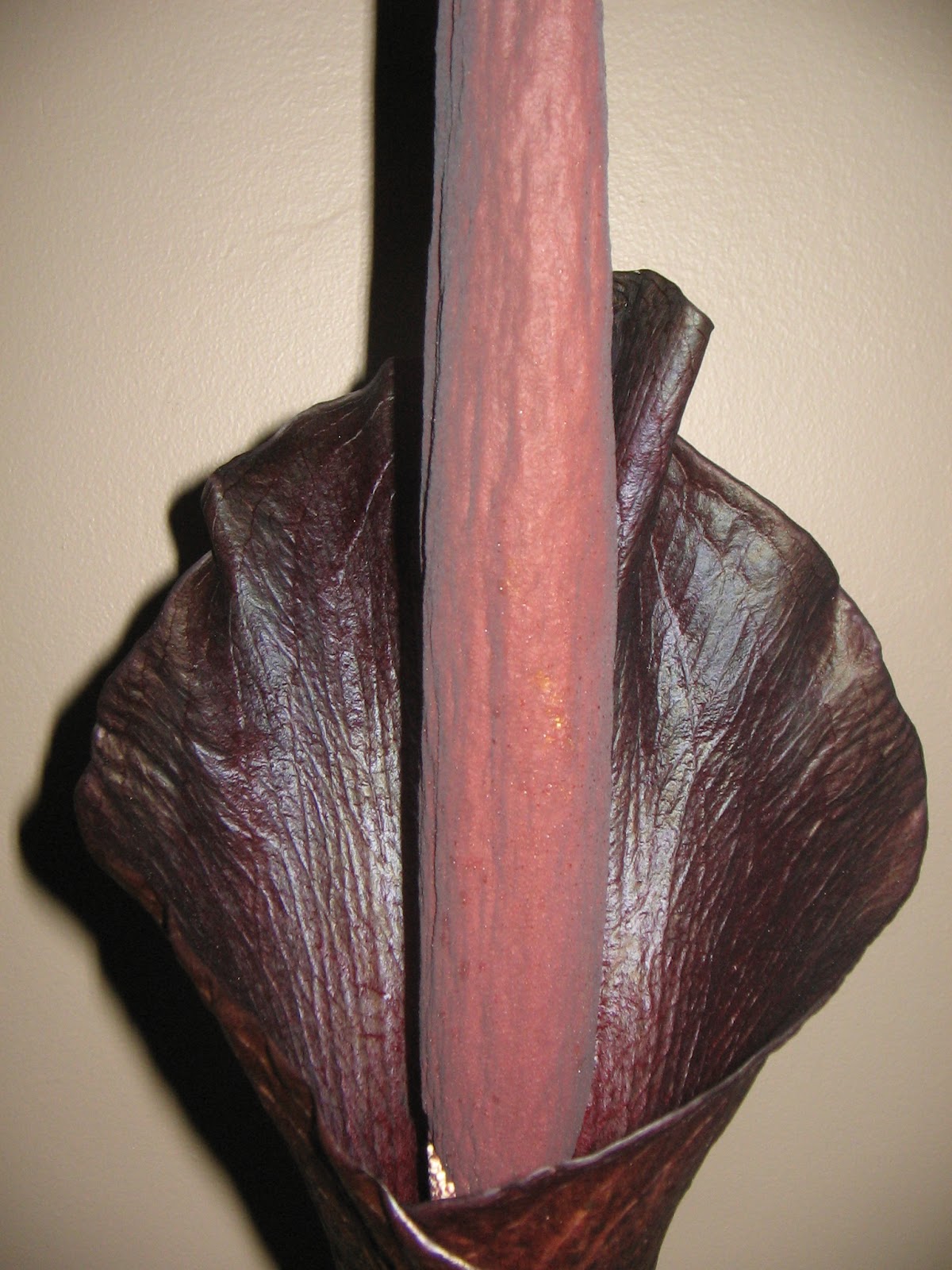
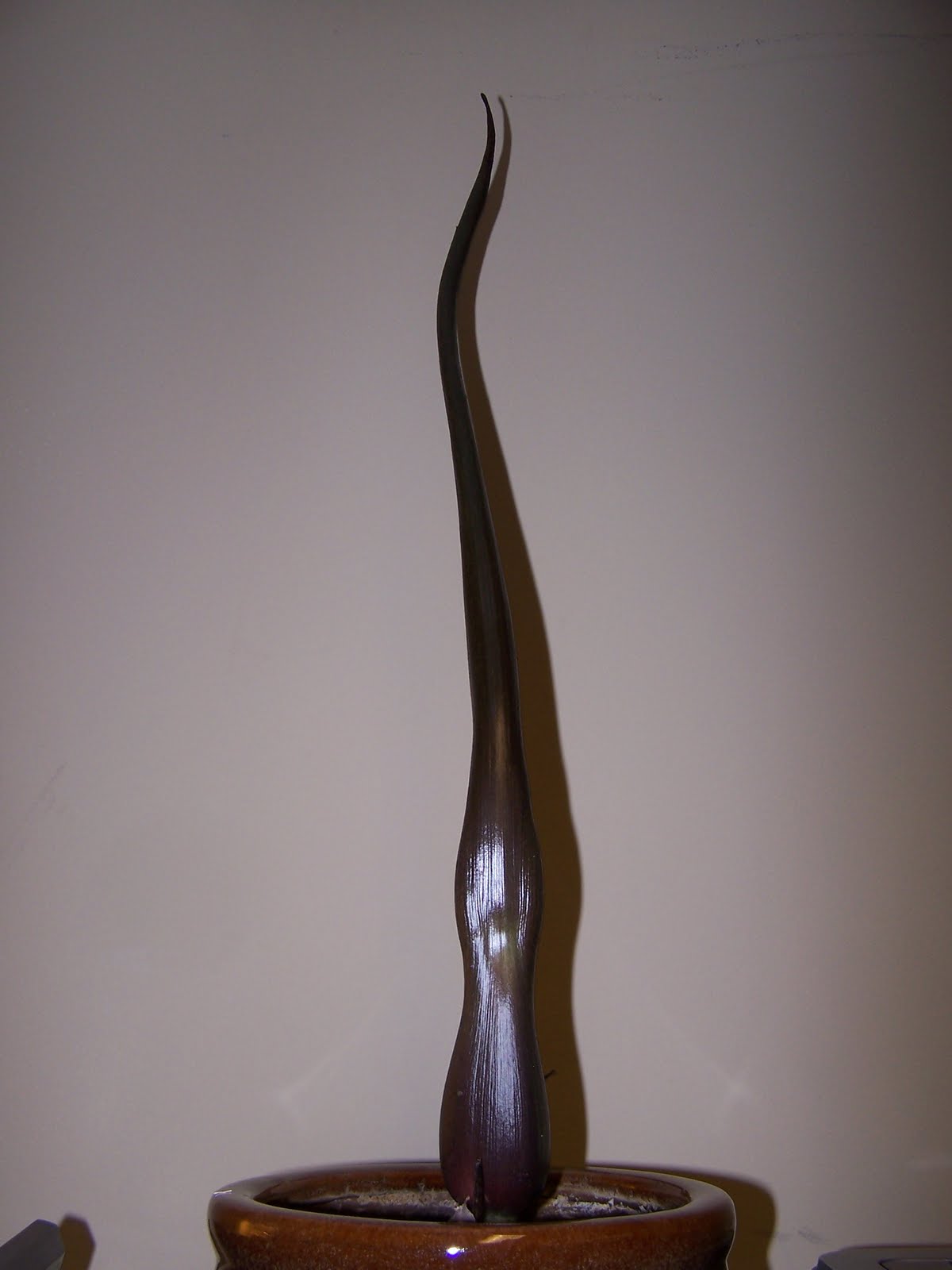
In June 2010 I purchased 10 seeds on ebay. Five of the seeds were lightly filed and then soaked overnight in warm water. The other five seeds were simply placed in near boiling water and then soaked overnight. Three of the ten seeds germinated, two that were filed, and one that was not. Germination took 7-10 days. The seeds were planted in a mix of 2/3 potting soil and 1/3 sand. The plants were placed on my back deck. They received several hours of bright sun daily, and were watered regularly. As you can see in the pics below, they grew quite well.
In August I replanted the two larger plants, and sold the third. The plants were once again planted in a mix of potting soil and fine play sand.
Once temperatures began to drop into the low 50's at night, both plants were moved indoors. My plan was not to water them all winter, as they are highly susceptible to root rot. Unfortunately in a moment of weakness, I watered them both in November. Within a few weeks, both began to loose their leaves. Unfortunately the pots that I was using didn't allow for much drainage. The sand also acted like a sponge, keeping the roots wet. Once the plants went dormant in my cool house, the roots rotted, and neither plant showed any growth in the spring.
2011
Since I killed last years plants over the winter, I decided to try again this spring. This time I thoroughly filed two seeds, soaked them overnight, and they both germinated. As you can see in the picture below, they both grew, but one much more than the other. These plants were potted in a mix of potting soil and perelite. NO SAND. The pots were also modified to allow for better drainage. They will be moved indoors in the next few weeks. One plant will be watered sparingly throughout the winter, the other will not be watered at all. Stay tuned for updates to see how they fair over the winter.